
How to Authenticate a Celine 16 Bag: 9 Checks

How to Authenticate a Celine 16 Bag: 9 Checks (2026)
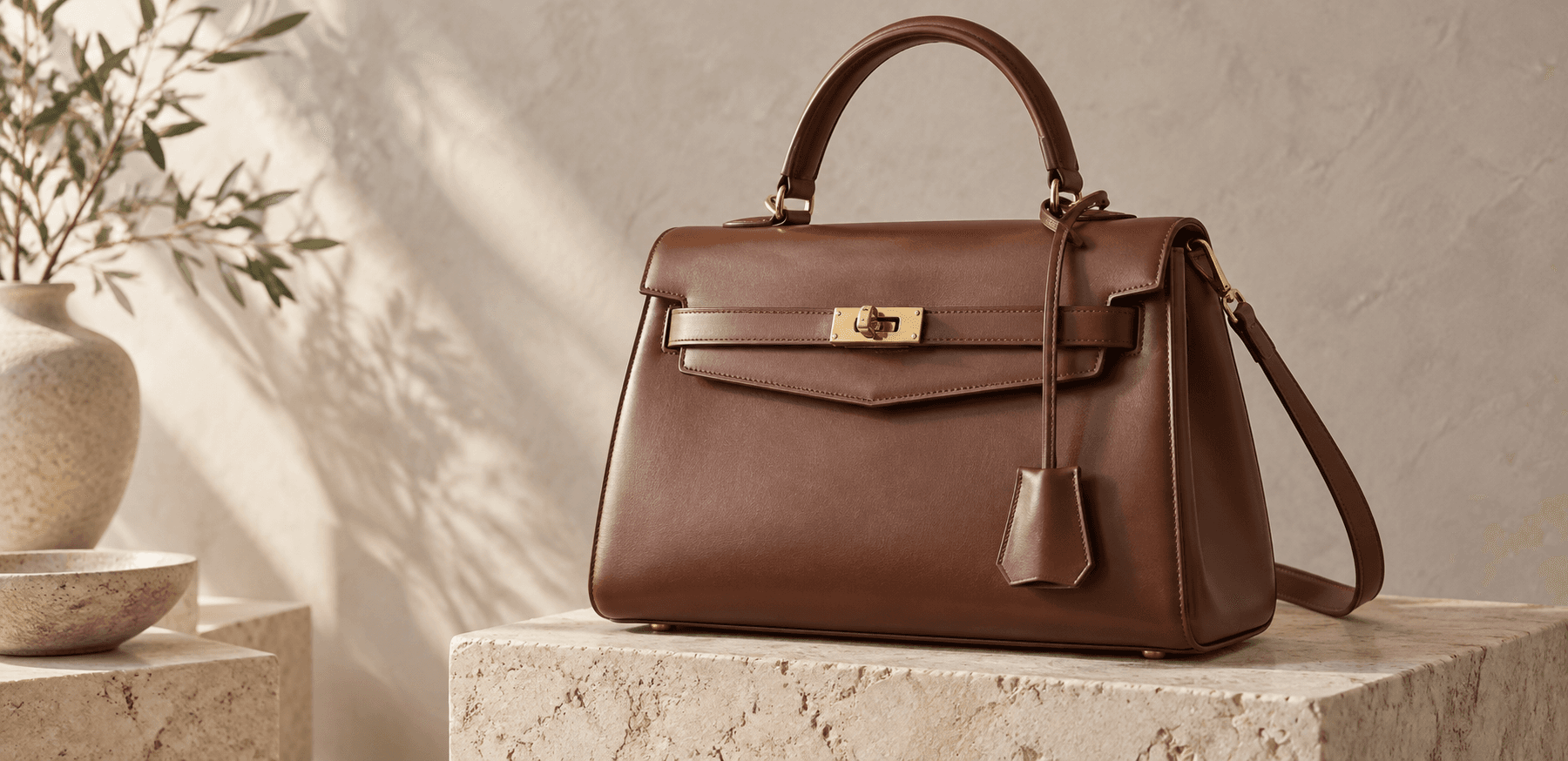
The Celine 16 rewards being read as an address before it is read as an accessory, because an address is what it is named for. The number is 16 Rue Vivienne in Paris, the Hôtel Colbert de Torcy where the house keeps its historic headquarters and atelier, and the bag that carries it was Hedi Slimane's opening statement for Celine: sketched, by the house's own account repeated across launch coverage, on the first day he arrived in 2018, then refined over the following months into a structured lady bag that reached stores in November of that year. Lady Gaga carried it first in public, Angelina Jolie followed, and the shape that both women held — a cropped, short flap over a belted, trapezoidal body, closed by a gold turn lock with a padlock swinging in a leather clochette — was deliberately archival, its flap and rounded belt detailing drawn from Celine bags of the 1960s. That history is the authentication problem as well as the appeal. The 16 is now a small family rather than a single bag: Mini, Small and Medium (Classique) top-handle sizes in satinated and grained calfskin, with Teen cross-body and Large tote relations sold under the same number, each keeping the flap, the belt and the lock while changing scale, carry and hardware proportion. Work the nine checks in order, always against the exact size and leather named in the listing — a Mini judged by Medium volume is a category error before it is an authentication — and let the checks vote together. This guide sits in our wider authentication library: Balenciaga City, Balenciaga Hourglass, Balenciaga Le Cagole, Bottega Veneta Andiamo, Bottega Veneta Cassette, Bottega Veneta Gemelli Bag, Bottega Veneta Hop Bag, Bottega Veneta Jodie, Bottega Veneta Pouch, Bottega Veneta Sardine Bag, Cartier Love Bracelet, Celine 16 Bag, Celine Belt Bag, Celine Luggage, Celine Triomphe, Chanel 19, Chanel 2 55 Reissue, Chanel Boy Bag, Chanel Classic Flap, Chanel Coco Handle, Chanel Gabrielle, Chanel Wallet On Chain, Dior 30 Montaigne, Dior Bobby, Dior Book Tote, Dior Caro, Dior Lady Dior, Dior Saddle Bag, Fendi Baguette, Fendi First Bag, Fendi Peekaboo, Givenchy Antigona, Goyard Saint Louis, Gucci Bamboo 1947, Gucci Dionysus, Gucci Horsebit 1955, Gucci Jackie 1961, Gucci Marmont, Gucci Ophidia, Hermes Birkin, Hermes Bolide, Hermes Constance, Hermes Evelyne, Hermes Garden Party, Hermes Kelly, Hermes Lindy, Hermes Picotin Lock, Jacquemus Le Bambino, Jacquemus Le Chiquito, Loewe Basket Bag, Loewe Flamenco, Loewe Gate Bag, Loewe Hammock Bag, Loewe Puzzle Bag, Louis Vuitton Alma, Louis Vuitton Capucines, Louis Vuitton Keepall, Louis Vuitton Multi Pochette, Louis Vuitton Neverfull, Louis Vuitton Onthego, Louis Vuitton Pochette Metis, Louis Vuitton Speedy, Louis Vuitton Twist Bag, Miu Miu Wander Bag, Prada Cleo, Prada Galleria, Prada Re Edition 2005, Saint Laurent Kate, Saint Laurent Le 5 A 7, Saint Laurent Lou Camera Bag, Saint Laurent Loulou, Saint Laurent Manhattan, Saint Laurent Sac de Jour.
Quick note: no single check proves a bag is real. Weigh all nine together, and always against the exact size, leather and carry format the bag claims to be.
Short answer
A genuine Celine 16 belongs to Celine and has been in the line since its November 2018 launch as Hedi Slimane's debut bag for the house, named for 16 Rue Vivienne and built as a structured top-handle lady bag with a cropped flap, belted detailing borrowed from 1960s Celine, a gold-finish turn lock, and a padlock in a leather clochette with its keys. Expect calfskin outside — satinated with its soft sheen, grained, or natural depending on the version — over a lambskin lining, two main compartments divided in most top-handle versions by a central zipped section, an inner flat pocket and an inner zipped pocket, and a flat pocket hidden on the front under the flap. Retail ladders most often order the top-handle family at roughly 18.5 cm wide by 15.5 cm high by 9 cm deep for the Mini, about 23 cm wide by 18 to 19 cm high by 10 cm deep for the Small, and about 32 cm wide by 22 to 24 cm high by 12 to 13 cm deep for the Medium or Classique, every figure approximate because retailers measure body, flap or footprint differently and calfskin eases in carry. The house publishes no public 16 serial lookup — modern Celine carries a repeatable production date code, not a unique serial — and price is never a check.
1. Model, Era and Size Class
Fix what the bag claims to be before scoring anything else, because 16 today names a family whose members sellers routinely list under one another's titles. The house boundary is tight for a modern icon, which makes it useful. Launch coverage, the house's own product pages and authenticated resale agree: the silhouette was drawn by Hedi Slimane on his arrival at Celine in 2018, was worn in public by Lady Gaga ahead of the September 2018 debut show and by Angelina Jolie in the first campaign, and reached stores in November 2018 in three sizes. A 16 history that predates that debut, or that treats any belted flap bag of any decade as a 16 regardless of lock and compartment plan, is background that needs evidence rather than a starting point. The name helps rather than decorates: the house itself ties the number to 16 Rue Vivienne, the Hôtel Colbert de Torcy address, so a listing story that invents a different origin for the numeral is already drifting.
Measure the empty bag, and say which measurement you took. For the top-handle family, retailers most often quote the body: Mini near 18.5 cm wide by 15.5 cm high by 9 cm deep, Small near 23 cm wide by 18 to 19 cm high by 10 cm deep and Medium, sold as the Classique, near 32 cm wide by 22 to 24 cm high by 12 to 13 cm deep. Individual listings spread around those figures — Small examples cluster near 23 to 23.5 cm long, Medium examples near 32 cm long in every serious listing — because some sellers include the flap overhang, others measure only the base, and satinated calfskin softens between stuffed and empty states. Teen cross-body and Large tote relations share the lock language at different footprints again, so fix the named relation first. A centimetre never decides this check; a bag sold as a Medium that measures as a Mini in all three dimensions has a naming problem to resolve first.
Close with version, because the size ladder does not share every other detail across its life. Core top-handle versions are calfskin — satinated in black, white, Amazone and slate tones, grained in black, white and tan, natural calfskin in tan — with lambskin lining and gold-finish hardware. Seasonal textile, denim, lizard and suede versions are judged by their named material story. Style references recur across genuine listings — the 197983 family for the Mini, 188003 for the Small and 187373 for the Classique in their satinated forms — but a reference is a listing aid, not an authentication: fix size class, leather, lining and carry first, then apply the remaining eight checks inside that format.
2. Structured Silhouette, Cropped Flap and Belt Detailing
Read the architecture before touching the leather, because the 16's identity is proportional: it lives in how a short flap meets a belted, structured body. Set the bag down empty on a flat surface and look at the pair as a system of two decisions. The genuine design presents a trapezoidal, self-standing lady-bag body — wider at the base, disciplined at the corners — closed by a cropped flap that stops short of the base, so the belted band beneath it stays visible as a design element rather than hiding under a full-length cover. Launch and archival descriptions return to the same vocabulary for a reason: the short flap and the rounded belt effect are quoted directly from Celine bags of the 1960s, and the belt is not a strap threaded through loops as an afterthought but a horizontal discipline that wraps the body's reading. Copies announce themselves here with a full-length flap that swallows the belt entirely, a belt printed or stitched flat onto the surface with no wrap and no tension, or a body so soft it slouches into a tote the moment the stuffing is removed.
Then work the flap as a working part, because each movement tests a different joint. Lift and close it repeatedly: it should hinge cleanly from the back panel without twisting, seat flush over the front pocket without gaping at one corner, and return to the same centred position over the turn lock every time. Look for the hidden third element of the architecture: a flat pocket on the front of the body, under the flap, present across the house specification for the top-handle family. A 16 whose flap covers no pocket, or whose pocket is sewn so shallow it holds nothing, is describing a copied outline rather than the issued plan.
Judge proportion as part of architecture. Across launch imagery and authenticated examples the flap stays cropped and the belt stays level — present enough to read across a room, never so deep that the bag becomes two competing rectangles. The body should stand without rocking, corners mirrored left to right, and the whole silhouette should hold when the shoulder strap is removed and the bag is carried by its top handle alone. A correct belt on a bag whose body will not stand has rescued nothing.
3. The 16 Turn Lock, Padlock and Clochette
Find the closures where this design actually puts them, because the 16's hardware story is a lock system rather than a single clasp, and copies routinely simplify it into a decorative medallion. The genuine arrangement has three linked parts. First, the flap itself closes with a gold-finish turn lock — called a twist lock in resale language — centred on the front, substantial enough to turn with a positive, damped action and to hold the cropped flap without lateral play. Second, the bag carries a separate padlock, housed in a leather key cover or clochette that hangs from the handle or side, with its set of keys. Third, a key holder inside completes the system. Retail and resale descriptions repeat the same trio across Mini, Small and Classique versions, and authenticated examples describe the same arrangement in hand. Work the turn lock repeatedly: it should rotate smoothly, seat fully closed without forcing, and open without the flap springing or sticking. A 16 that closes with a magnetic snap borrowed from another model, a press-stud the version never carried, or a turn lock moulded as one fixed ornament that does not turn, is describing another bag's closure logic, not this one's.
Read the padlock and clochette directly, because they carry both function and signature. The padlock should feel like hardware rather than costume: solid weight for its scale, clean edges, a shackle that moves as a lock should, and a finish that matches the turn lock exactly. The clochette that houses it should share the body's leather and stitch discipline, hang without glue residue or fraying at its join, and hold the keys without stretching. The set matters as a set — a convincing turn lock beside a hollow, feather-light padlock in a clochette of different leather describes parts that did not begin life together.
Inventory the remaining metal with restraint. Hardware is gold in finish across the core family, brass in substance in resale descriptions, with the turn lock, padlock, strap fittings and handle rings sharing one finish family. What matters is agreement, not a single mandated brightness: genuine gold finish reads rich and even, neither dull and grey nor mirror-chrome, and lettering or engraving where present is deeply and evenly pressed. A correct padlock on a bag whose flap and belt have already failed rescues nothing.
4. Leather Families and the Lambskin Hand
Handle the material the version claims, because on this model the leather naming itself is a signature and copies most often get the naming wrong. Start by identifying what the version claims, since the 16 does not have one universal face. The core top-handle bag is calfskin: satinated calfskin with its characteristic soft sheen and smooth transparency in the house's own description, grained calfskin with a fine, even pebble, and natural calfskin in tan. Seasonal versions add textile with calfskin, denim, lizard and suede, each judged by its named story. The lining across the top-handle family is lambskin — supple, smooth and tonal — a specification the house repeats on its product pages and resale repeats in hand. A bag sold as satinated calfskin that presents a coated, plasticky face with a stamped repeat grain, or a core version lined in thin synthetic fabric presented as original, has a version disagreement to resolve before grain quality is even scored.
Then score the leather with the hand test. Press a panel between flat palms and bend it gently: genuine satinated calfskin moves as one firm-supple surface, holding the bag's structure while the face stays dry and fine, with light surface scratches that can soften when massaged — behaviour the house itself notes for its leathers. Grained calfskin should show an even, fine grain that continues around corners and into the flap without patchiness between body, flap and handle. The smaller sizes must share that hand at a smaller scale; a convincing Medium body paired with a stiff, squeaky Mini-scale handle or strap describes parts that did not begin life together.
Smell and age honestly. Real calfskin and lambskin carry a clean leather smell; a sharp chemical note on a bag claiming satinated calfskin is a finding. Wear should agree with the claimed life: softening at the flap hinge and handle grip, light corner rub on the base, fine scratching on satinated faces — never cracking through the surface, peeling at the edges or colour lifting off in sheets, which describe coating failure rather than leather ageing. The house is explicit that its leathers are natural and that tonal variation, marks and veins are features rather than faults, so judge evenness within that honest range rather than demanding a plastic uniformity no real skin offers.
5. Top Handle, Removable Strap and Bottom Studs
Work the carry against the format fixed in Check 1, because the 16 does not have one universal strap story and importing the wrong one is the fastest way to misjudge a genuine bag. The top-handle family carries two ways on the body and a third by hand: a single rolled leather top handle that is part of the bag, and a removable, adjustable leather shoulder strap for shoulder and cross-body wear. Handle drops scale with size — roughly 7 cm on the Mini, about 8.5 cm on the Small and about 11.5 cm on the Medium — while the removable strap drops long, roughly 46 to 48 cm, so the bag sits at the hip rather than under the arm. Fix which size the named version owns, then score only that size's drops. A Mini sold with a Medium's handle proportions has a naming problem before it has a hardware problem.
Score the handle as structure, in each working state. Fitted, the top handle should feel like the bag continued — same leather family, rolled roundness without crunching or collapse — and bear the loaded bag without its rings gaping or twisting. The shoulder strap should attach and detach positively, adjust without slipping, and share the body's leather and the hardware's finish. Grip zones should soften and darken consistently with the bag's claimed life: a pristine handle over worn base corners describes substituted parts, and added chains or charms sold as original on the top-handle version should be questioned, because the 16's versatility is built into its handle-and-strap pair itself.
Finish at the base, because this family protects its footprint. Core versions carry bottom studs — small metal feet that lift the leather off the surface — listed across retail specifications for the Small and repeated in resale inventories. They should be evenly set, firmly fixed, matched in finish to the turn lock and padlock, and worn consistently with the corners above them: bright, unworn studs under scuffed corners, or studs missing on a version that issues them, are disagreements to resolve. A correct strap on a bag whose base has already failed rescues nothing.
6. Interior Plan: Two Compartments and the Hidden Pocket
Open the flap and read the inside as a plan, not as storage trivia, because 16 interiors are unusually specific and copies routinely furnish the silhouette with a generic single sack. Start with the top-handle plan the house specifies: two main compartments, one inner flat pocket and one inner zipped pocket, with the compartments in most top-handle versions divided by a central zipped section so the interior reads as partitioned rather than open. The front flat pocket under the flap (Check 2) completes the issued map. Each compartment should be sized to the footprint fixed in Check 1 — a Medium that plainly carries documents, a Small that plainly does not swallow Medium volume — and the zipped pocket's zip should glide without snagging, its surround finished as cleanly as the exterior flap. A top-handle 16 claiming a single open compartment with card-slot walls, or extra sewn divisions the version never carried, is not a bonus; it is a different interior plan wearing this model's name.
Judge the lining by the same discipline. The top-handle family is lambskin-lined: smooth, substantial and tonal with the exterior, fitted without bubbling, excess material at the corners or raw unfinished edges. Textile or synthetic lining presented as original inside a core calfskin version is a disagreement to resolve before anything else inside is scored. The central zipped divider, where the version carries it, must meet the main body's standard — same lining discipline, same zip quality — scaled to its role rather than skipped.
Finish with interior agreement. Pocket placement should not distort the cropped flap when closed, and wear should agree with the plan: lining scuffs in the main compartments, light marks where the keys and clochette rest. Copies lose this check with linings tearing from the pocket seam, a front pocket too shallow to hold what its placement promises, or interior volume contradicting the outside size class. Dust bag and packaging support a bag that already passes and never carry a verdict.
7. Heat Stamp, Individual Numbering and Origin
Find the branding where this house actually puts it: inside and on the pocket, understated, and never as an exterior logo event. Authenticated resale records the signature in the same form across sizes — Celine Paris Made in Italy — and the discipline matches the wider house rule repeated across Celine authentication guidance. Read it straight on and at an angle, where the version places it. The house wordmark should sit as a clean heat impression — pressed into the leather so it reads by depth, letters evenly spaced and evenly deep, CELINE set bolder above a slimmer PARIS in the house proportion — never a printed, foiled or painted substitute that sits on the surface, and never a loud external logo the Slimane-era philosophy withholds. From September 2018 the house dropped the accent over the E, so a 16 — a Slimane-era model by definition — carries CELINE without the accent; an accented É on a bag claiming to be a 16 is an era disagreement. An exterior logo plaque on a 16 is itself a disagreement; a shallow, doubled or blurry interior impression describes copied dies.
Then find the individual number, because the 16 adds a second identity record most Celine models do not carry. The house states that each 16 is individually numbered on the back of the pocket, a personal, exclusive marking repeated across launch and retail descriptions. Treat it correctly: the number is a production record that must sit in the right place and agree with the bag in hand (Checks 1, 4 and 6), and no public lookup turns a matching number into a verdict. Our review found no public Celine serial-query service for this model, and copied numbers circulate, so a correct-looking number on a bag whose leather has failed proves nothing; a missing number where the version places one is a yellow flag, not a standalone condemnation. Close with origin: Made in Italy, repeated across retail and resale listings for every version, in the same heat-stamp discipline as the wordmark.
8. Date Code and the Production Tab
Locate the small production tab sewn inside, because modern Celine marks production rather than identity, and misunderstanding that distinction is the most common paperwork error on this model. House-level and specialist guidance describes the modern form consistently: a date code, not a unique serial number, in the format of one letter, a dash, two letters, a dash and four numbers — capitals throughout, stamped on a leather tab or leather lining, never printed on fabric. The code repeats across multiple bags made in the same place and week, counterfeiters copy genuine formats and even genuine numbers, and the house offers no public lookup that converts a code into a verdict. On the 16, expect the tab inside an inner pocket or along the interior lining, placed subtly enough that a thorough search with a light is normal. A code printed on fabric, rendered in mixed case, or offered with a verification printout as proof has failed the form before its digits are read.
Read the four numbers by era, because Celine changed its dating system and the 16 sits entirely on one side of that change. For bags made after mid-2014 — which is to say, for every genuine 16 — the four digits follow a week-and-year pattern in which the first and third digits together give the week of the year and the second and fourth digits together give the year. A code whose implied year predates the model's November 2018 launch, or whose format follows the earlier month-and-year pattern, contradicts the bag's own era claim. Specialist guidance is explicit that tab thickness, shape and font vary by year and style, so judge cleanliness, even depth and agreement with Checks 1 and 7 rather than demanding one photographed font.
Close by weighing the tab as a record, not a result. A clean, era-correct code that agrees with the size, leather and stamp in hand is reassuring supporting evidence; a poorly stamped, wrongly formatted or era-impossible code is a red flag. Between those poles, the twin tests remain the bag itself — flap and belt architecture, lock system, leather hand and interior plan — because a code can be copied perfectly onto a bag that fails every one of them. Price, once again, authenticates nothing.
9. Stitching, Edge Paint and Finish
Finish where the model's construction hides its labour, because a 16 shows its workmanship along a cropped flap edge, a belt wrap and a partitioned interior rather than along straight seams. Work the bag zone by zone. Around the flap, stitching should run thin, long and even, following the crop without wandering, puckering or cutting across the leather; the same discipline holds at the handle attachments, strap joins, belt ends and base corners — the places where replica production speeds up and stitch length changes. Specialist Celine guidance sets the baseline this model inherits: every stitch the same thickness, spacing measured and constant, thread colour matched to the ground material, with no loose ends, skipped stitches or doubled-back repairs at seam ends. Minor hand-finished variation on a genuinely hand-built bag is normal; systematic looseness across flap and body together is not.
Read edges with the same paired discipline. Edge paint should be smooth, even and fully bonded, following corners without cracking, bubbling, drips or peeling — thinnest exactly where the curve is tightest, never thickest there. Leather edges on the clochette, handle and strap should be sealed and finished as deliberately as their centres, and the lambskin lining should meet the exterior without glue residue, exposed foam or raw board at any opening. Both the interior zip and the turn lock should still work smoothly after repeated handling — hardware that degrades during a careful authentication is telling the truth about itself.
Stand back and let the nine checks vote: era and size, flap-and-belt architecture, lock system, leather families, handle and strap, interior plan, stamp and numbering, date code, and stitch and edge finishing must all describe the same November 2018 Slimane bag in the same named version. Three or more disagreements is a bag to walk away from; a single borderline reading calls for professional, in-hand authentication. Genuine 16s change hands at every price level and copies are listed at convincing prices, so the verdict is always the nine checks agreeing — never the number in the listing.
At a glance
- Era and format first: November 2018 Hedi Slimane debut named for 16 Rue Vivienne; structured top-handle lady bag in Mini, Small and Medium (Classique), with Teen and Large relations under the same number. Judge every later check inside the named format.
- Size is approximate by design: top-handle body near 18.5 by 15.5 by 9 cm (Mini), 23 by 18 to 19 by 10 cm (Small) and 32 by 22 to 24 by 12 to 13 cm (Medium/Classique). Retailers measure body, flap or footprint differently, and calfskin eases.
- Architecture is the signature: self-standing trapezoidal body, cropped short flap that leaves the 1960s belted band visible, flat pocket hidden on the front under the flap.
- Closure is a system, not a clasp: gold-finish turn lock on the flap, separate padlock in a leather clochette with keys and key holder, each 16 individually numbered on the back of the pocket.
- Surfaces must name correctly: satinated, grained or natural calfskin outside over lambskin lining; handle drops roughly 7, 8.5 and 11.5 cm by size with a removable strap near 46 to 48 cm, bottom studs at the base.
- Identity is a record, not a lookup: heat-stamped CELINE PARIS (no accent on this Slimane-era model) with Made in Italy, plus a repeatable date code in one-letter, two-letter, four-number form. No public serial lookup exists for this model, and price is never a check.
Celine 16 vs similar-looking bags
| Feature | Genuine Celine 16 (named version) | Common copy or confusion |
|---|---|---|
| Silhouette | Self-standing trapezoidal lady bag with cropped short flap leaving the belted band visible; flat pocket on the front under the flap | Full-length flap swallowing the belt, belt printed flat with no wrap, or soft body that slouches like a tote |
| Era and naming | November 2018 Hedi Slimane debut, named for 16 Rue Vivienne (Hôtel Colbert); CELINE without the accent | Pre-2018 history, invented origin for the numeral, or accented É on a Slimane-era model |
| Closure | Gold-finish turn lock that turns and holds, plus separate padlock in leather clochette with keys and key holder | Magnetic snap or fixed ornament that does not turn; hollow padlock in mismatched leather; missing clochette system |
| Leather and lining | Satinated, grained or natural calfskin outside as named; lambskin lining, firm-supple and dry in hand | Coated plasticky face with stamped grain; synthetic lining sold as original; patchy grain between flap and body |
| Carry | Rolled top handle scaled to size (roughly 7, 8.5, 11.5 cm drops) plus removable adjustable strap (roughly 46–48 cm); bottom studs | Handle proportions from another size; added chains sold as original; missing or mismatched base studs |
| Interior | Two main compartments (central zipped divider on most top-handle versions), inner flat pocket, inner zipped pocket | Single open sack, invented card-slot walls, or extra divisions the version never carried |
| Branding | Heat-stamped interior signature Celine Paris Made in Italy, CELINE bolder over slimmer PARIS, read by depth | Printed or foiled lettering, exterior plaque, or stamp shallow, doubled and blurry |
| Number and code | Individual number on back of pocket plus date code (one letter–two letters–four numbers, post-2014 week-year) on leather tab; no public lookup | Number missing where version places it, code on fabric or in wrong era format, or verification printout offered as proof |
FAQ
When was the Celine 16 released, and who designed it? The 16 was Hedi Slimane's debut bag for Celine, sketched on his arrival in 2018, worn publicly by Lady Gaga ahead of the September 2018 show and sold from November 2018. The name is the house's address, 16 Rue Vivienne in Paris (the Hôtel Colbert de Torcy). A 16 dated before that debut needs evidence, not acceptance.
What sizes does the Celine 16 come in? The top-handle family runs Mini, Small and Medium (sold as the Classique) — body roughly 18.5 by 15.5 by 9 cm, 23 by 18 to 19 by 10 cm and 32 by 22 to 24 by 12 to 13 cm — with Teen cross-body and Large tote relations under the same number. Retailers measure body, flap or footprint differently and calfskin eases, so use the ladder to test naming rather than to pass or fail a bag on a centimetre.
What closes the Celine 16, and what is the clochette? The cropped flap closes with a gold-finish turn lock. Separately, the bag carries a padlock housed in a leather key cover — the clochette — with its keys and an interior key holder. Each 16 is also individually numbered on the back of the pocket. A magnetic snap or a fixed, non-turning ornament is another model's logic, not this one's.
Is the Celine 16 lined in leather? Yes, on the core top-handle family: calfskin outside (satinated, grained or natural as named) over a lambskin lining, with two main compartments, an inner flat pocket and an inner zipped pocket. Judge the bag in hand against the lining its named version carries; synthetic lining presented as original on a core version is a disagreement to resolve.
Can I verify a Celine 16 serial number online? No public lookup exists for this model. Modern Celine carries a repeatable production date code (one letter, two letters, four numbers; after mid-2014 the digits read week and year), not a unique serial, and the 16 adds an individual pocket number. Check that both records agree with the bag's size, leather and era, then let the flap, lock, leather and interior decide — and never price, which authenticates nothing here either.
Sources
- CELINE introduces Hedi Slimane's first bag, the 16, ahead of his debut show (Hypebeast) — November 2018 launch timing, first-day sketch account, 16 Rue Vivienne naming and 1960s cropped flap with belted detailing. Used for era and architecture; sizes cross-checked against retail below.
- CELINE Mini 16 in Satinated Calfskin, official product page (CELINE) — house naming note, individual pocket numbering, calfskin with lambskin lining, turn lock closure, two-compartment plan with inner and outer pockets, and Mini measurements with handle and strap drops. Used for format and interior; dimensions cross-checked.
- Celine 16 Bag Review, Sizes and Specifications (Bragmybag) — 2018 release summary, three-size ladder with dimensions, leather families, gold-finish hardware, turn lock with key holder and individually numbered pocket, handle and strap drops, and Made in Italy. Used for size class and carry; headline sizes cross-checked against the house page.
- Decoding the Celine 16 Bag: A Size Guide (Luxbags) — independent Mini, Small and Medium measurements and family variations including Teen and tote relations. Used as a second size source; figures weighed against house and resale measurements.
- Celine Grained Calfskin Small 16 Top Handle Bag, authenticated example (FASHIONPHILE) — 2018 dating, grained calfskin with rolled handle and gold hardware, turn lock opening to partitioned leather interior, clochette with lock and keys, and authenticated Small measurements. Used for resale agreement.
- Celine Pre-Owned 16 Two-Way Bag (Farfetch) — lambskin and calfskin composition, single handle with detachable strap, twist-lock with padlock fastening and hanging key fob, and independent Medium measurements. Used for lock system cross-check.
- Celine Small 16 Bag in Satinated Calfskin (Luvlux HK retail listing) — Small dimensions, calfskin with lambskin lining, turn lock closure, compartment and pocket plan, strap and handle drops, clochette and bottom studs. Used as a further retail cross-check.
- Celine 16 Medium Shoulder Bag in Black Leather, authenticated example (Collector Square) — Medium measurements, leather lining with zipped compartment, padlock with clochette and keys, and Celine Paris Made in Italy signature. Used for interior and stamp agreement.
- Celine 16 Small at Luxe It Forward (authenticated resale) — satinated calfskin exterior with top handle and detachable strap, clochette with padlock, flap with turn lock over front slip pocket, leather-lined interior divided by a central zipped compartment, Made in Italy and Small measurements. Used for interior plan.
- How to Read Celine Date Code (Luxbags) — date code as repeatable production marking rather than unique serial, one-letter, two-letter, four-number format, post-2014 week-and-year reading, and placement on lining or leather tab. Used for code discipline only; 16 facts are taken from the 16 sources above.
- Your Guide to the Celine Luggage Tote (Luxury Shops) — heat-stamp discipline, serial format of one letter, two letters and four numbers with week and year reading, and Made in Italy placement varying by model. Used for house-level stamp and code baseline.
- Celine: How to Authenticate Your Bag (Legit Check) — CELINE bolder over slimmer PARIS engraving proportion, thin long flap stitching, hardware shine and stitching consistency baselines. Used for house-level finish checks only.
- Authentication (Collector's Cage) — code-alone-never-proves rule, stitching and edge-finish baseline, and model-variation caution for Celine production markings. Used for house-level method only.
UOOTD Team authentication library. This guide judges construction against published launch, retail and authenticated-resale descriptions of the exact size and version named in a listing. It is not affiliated with Celine, and no construction guide replaces professional in-hand authentication for a high-value purchase.
From the UOOTD store
Explore bags at UOOTD
Prices in USD. View product details and current availability on our store.