
How to Authenticate a Fendi Peekaboo Bag: 9 Checks

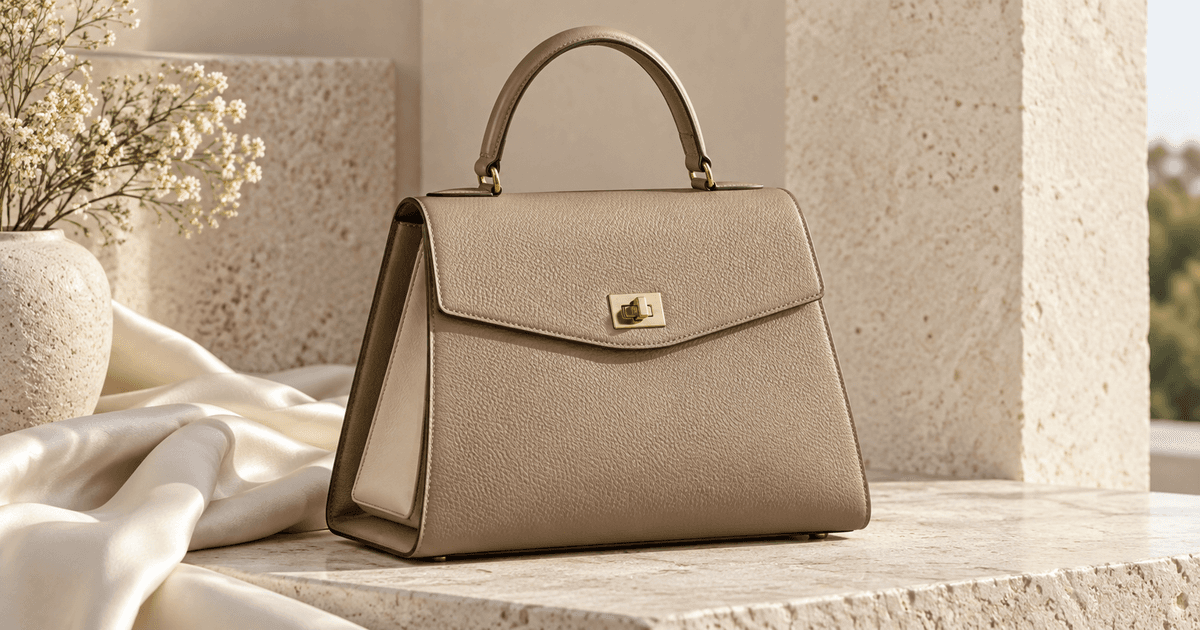
How to Authenticate a Fendi Peekaboo Bag: 9 Checks (2026)
Most designer bags put their luxury on the outside. The Peekaboo puts it on the inside — and that is exactly what makes it hard to copy well. Designed by Silvia Venturini Fendi, presented in 2008 and introduced for Spring/Summer 2009, the bag takes its name from the children's peek-a-boo game: from the outside it reads as a traditional trapezium frame bag with a single top handle, but one side can be left unfastened so the contrasting interior peeks out. Fendi's own product copy repeats the formula in almost identical words across seasons — a timeless icon created in 2009, two internal compartments divided by a stiff partition, an inner pocket, and the iconic twist lock on both sides, carried by hand or on the shoulder or cross-body with an adjustable, detachable strap. Copies approximate the trapezoid from photographs; they fail on the rigid partition, twin working locks, handle arch, counted Selleria stitching, and an interior finished to be looked at. This guide runs the nine checks in the order authenticators use them. Fendi readers should start it beside our Fendi Baguette guide: the Baguette is the house's other Venturini Fendi icon, and the two bags share hardware and serial logic while differing completely in architecture. Series context: How to Authenticate a Dior Book Tote · How to Authenticate a Loewe Puzzle Bag · How to Authenticate a Gucci Jackie 1961 · How to Authenticate a Louis Vuitton Speedy · How to Authenticate a Chanel Boy Bag · How to Authenticate a Saint Laurent Manhattan · How to Authenticate a Chanel 19 Bag · How to Authenticate a Dior Lady Dior Bag · How to Authenticate a Hermès Kelly Bag · How to Authenticate a Goyard Saint Louis Tote · How to Authenticate a Celine Triomphe Bag · How to Authenticate a Bottega Veneta Jodie · How to Authenticate a Balenciaga City Bag · How to Authenticate a Fendi Baguette Bag · How to Authenticate a Cartier Love Bracelet · How to Authenticate a Prada Galleria Bag · How to Authenticate a Saint Laurent Loulou · How to Authenticate a Gucci Marmont Bag · How to Authenticate a Dior Saddle Bag · How to Authenticate a Hermès Birkin · How to Authenticate a Chanel Classic Flap · How to Authenticate a Louis Vuitton Neverfull · How to Authenticate a Hermès Constance Bag.
Quick note: no single check proves a bag is real. Authenticators weigh all nine together — and against the size, generation, leather, and production year the bag claims to be. A detail that is correct for a classic Iconic Regular can be wrong for an ISeeU Small, and the reverse is also true.
Short answer
An authentic Fendi Peekaboo is a trapezium top-handle frame bag with twist-lock closures on both the front and back faces, a single top handle plus an adjustable, detachable shoulder strap, and two internal compartments divided by a rigid (stiff) central partition. The classic Iconic ladder is documented at Micro about 18 × 13 × 6 cm, Mini/Small about 23 × 18 × 8 cm (current Fendi Mini listed at 23 × 18 × 11 cm), Medium/Regular about 33 × 26 × 12 cm, Large about 40 × 30 × 15 cm, and XL about 41 × 33 × 16 cm, with the newer ISeeU line measured separately (Petite about 20 × 15.5 × 11 cm, Small about 27 × 21 × 11 cm, Medium about 33.5 × 25.5 × 13 cm) — dimensions vary by version and year, so measure and judge generation together. The top handle holds a clean, moderate arch; copies characteristically arch too high and too tall. The exterior lock bar carries a deeply printed "FENDI"; behind it, the interior metal plate uses larger side screws, and its "MADE IN ITALY" runs thicker, smaller, and less sharply defined than the thinner, larger, crisper text on replicas — the opposite of the usual instinct, which is why this check catches people. Stitching is more noticeable, thicker, and larger (Selleria: 306 hand-sewn macro stitches on ISeeU Petite, 556 on ISeeU Small in the cited examples). Inside is leather (nappa/calfskin/lamb by version), with an inner pocket and a more angled, less curvy interior plaque. Model codes begin 8BN; identity sits on an inner leather serial plaque, with hologram (from ~2004/2005) and later RFID tags by era — none authenticates alone. Fakes fail on over-arched handles, thin engraving, small screws with oversized crisp plate text, thin stitching, collapsing partitions, and curvy plaques.
1. Model, Silhouette, and Size
Start by confirming the bag in front of you is the model, generation, and size it claims to be:
- The Peekaboo silhouette is a structured trapezium frame bag, not a tote and not a flap bag: a firm upper frame closed by twist locks, gusseted sides, a single reinforced top handle, and a detachable shoulder strap for shoulder or cross-body wear.
- Know the generations before you measure. The family is not one ladder: the classic Iconic (including Regular, Mini, Large, and discontinued XL), the Selleria line with visible hand stitching, the lighter X-Lite, and the newer ISeeU with a cleaner, more structured — in some descriptions slightly softer — opening and, on Medium and above, a removable internal pocket that East-West sizes cannot accommodate. Japanese resale scholarship is explicit that size names mislead across generations: an older "Regular" and a current ISeeU Medium are not the same bag because both measure near 33 cm, and current Fendi listings must not be used as the only size guide for older stock. Authenticate against the claimed generation first, size second.
- Measure the base and write the numbers down. Retail and size-guide references agree on the shape of the Iconic ladder even where centimetres differ: Micro ~18 cm wide, Mini ~23 cm, Medium/Regular ~33 cm, Large ~40 cm, XL ~41 cm, with heights rising roughly 13 / 18 / 26 / 30 / 33 cm. Fendi's own current Mini listing gives 23 × 18 × 11 cm (width × height × depth) at 0.67 kg — deeper than the 8 cm depth some third-party Iconic tables quote for Mini, which is precisely the varies-by-version point: depth and weight move with leather, lining, and season. A bag matching no documented size in any generation is telling its own story, and counterfeits are routinely inaccurate on sizing.
- Place the bag in time. Anything claiming to be a Peekaboo produced before the 2008 presentation / Spring/Summer 2009 introduction is impossible on its face, just as a Book Tote claiming a pre-2018 date fails in the Dior Book Tote guide. Within the family, an ISeeU-only feature (the removable pocket, the East-West proportion) on a bag dated to the early Iconic years — or early heavy construction sold as a late lightweight X-Lite — contradicts its own claimed year before any stamp is read.
2. Structure: Frame, Gussets, and the Rigid Partition
The Peekaboo's structure is its skeleton, and copies cannot borrow it:
- Set the empty bag down and open both lock faces. A genuine Peekaboo holds a suspended drape when open: the upper frame stays true, the gusseted sides relax without collapsing, and the bag can be carried closed and formal or with one side left open so the interior shows — the peek-a-boo effect the name describes. A bag that only photographs correctly when stuffed, whose frame twists when one lock is released, or whose sides puddle outward is failing the design, not merely showing wear. Some softening is expected on an older soft-leather bag; a warped, leaning, or collapsing center structure is a different category, and experienced buyers treat it as a first check.
- Find the partition and test it. Fendi's repeated specification is two internal compartments separated by a stiff/rigid partition — cited for current ISeeU bags in calfskin, nappa, lamb-leather, and Selleria versions alike, and for the classic bag as two compartments split by a rigid divider. The partition should feel genuinely stiff, stand vertically, and divide the bag into two usable compartments; on versions where the partition carries an FF motif, brushed finish, or contrasting leather, that finish must be neat and intentional. A missing partition, a floppy fabric divider glued in its place, or a single open cavity sold as a standard two-compartment Peekaboo fails here even when the exterior photographs well. The lighter X-Lite reworks this architecture and the ISeeU softens the opening, so judge the claimed generation's construction — but a standard Iconic or ISeeU bag without the rigid divide is not the bag on its label.
- Read the gussets and edges as a pair. The gusseted pocket construction is part of the original description of the bag, and the sides should mirror each other, expand evenly, and return to the trapezoid without twisting the locks out of alignment. Edge paint and edge coating deserve the same pass experienced sellers give corners: light corner rubbing is honest wear on an older bag, while cracked edge coating, deep wear exposing underlying material, or bulky uneven edges signal either hard use that must be priced as such or copyist finishing — the two are distinguished by whether the frame, partition, and locks still agree with Checks 4 and 5.
3. Leather and Materials — Including Selleria
Fendi built the Peekaboo to show off leather making, so material discipline is the second skeleton:
- Expect the documented families and judge the claimed one. Current and resale references converge on smooth calfskin, grained calfskin, soft nappa, and Cuoio Romano Selleria calfskin with its characteristic natural grain from a metal-free tanning process, joined by seasonal raffia-effect, interlaced/woven leather, suede-lined variants, and exotic skins including crocodile among the house's most expensive pieces. Interiors are specified just as concretely: soft nappa leather, calfskin, lamb leather (Fendi lists 100% lamb leather inside the current Mini), and suede on specified Iconic Soft versions. A leather name that belongs to no Fendi vocabulary for this model — or a "nappa" with a plastic sheen and no depth — fails before hardware is touched, the same first filter the Loewe Puzzle Bag guide and the Celine Triomphe Bag guide apply to their own material claims.
- Judge the leather in the hand, not the listing. Venturini Fendi chose very soft leather for the original concept — soft enough that the bag could be shown open revealing a different color of beautiful glove leather inside — and that softness-with-structure balance remains the genuine hand feel: supple faces that still hold the trapezoid, grain that sits in the material rather than floating on it as a surface coating, and color depth that does not crease white at the frame fold. Thin, papery, or vinyl-like skin fails; so does a rigid board-like panel sold as a soft Iconic, unless the claimed version (for example a structured ISeeU or a Selleria) specifies it.
- Authenticate Selleria separately. Selleria is Fendi's hand-finishing tradition handed down since 1925, recognizable by visible hand-finished construction and macro stitching that gives the bag a completely different look from a smooth minimal version. Because the stitching is the design on these bags, damaged, dirty, or irregularly executed macro stitching is far more noticeable — and far more damning — than the same flaw hidden in a blended seam. Do not compare a Selleria bag directly with a smooth-leather version of the same approximate size on price, finish, or stitch character; they are different products sharing a silhouette.
- Check interior material against the exterior claim. The Peekaboo's interior is the display surface — calfskin, nappa, Zucca jacquard, Pequin stripe, python, and Selleria Cuoio Romano interiors are all documented across the model's life — so interior wear, staining, and discoloration matter more here than on a fully closed tote. A warm, cheap-feeling fabric lining under a bag sold as a leather-lined Iconic or ISeeU version contradicts its own specification, and a contrasting interior whose color, motif, or leather disagrees with every documented example of the claimed model and season needs an era-correct explanation, not enthusiasm.
4. The Twist Locks: Front Face, Bar, and FENDI Engraving
There are two locks, and both must work — that doubling is the check copies least expect:
- Work both closures first, front and back. The signature is an iconic twist lock (turn lock) on both sides, seating into a bar with gold-finish or palladium-finish metalware depending on version. Each lock should turn correctly, sit properly, and hold its compartment without looseness, grit, or forcing; surface scratches on used hardware are extremely common and, alone, mean little. What matters is function and finish together: a lock that is loose, damaged, misaligned with its bar, or plated so thinly that base metal shows at the turn points is failing the mechanism the whole bag is named around.
- Magnify the exterior engraving. On the lock buckle/bar, the genuine "FENDI" text is deeply printed; the documented replica direction is thinner text, not as deeply imprinted. Read depth, not just spelling: crisp edges, even depth across all five letters, and grooves that stay clean and polished under magnification. Shallow laser-style engraving with whitened residue, wobbly letterforms, or a bar whose finish flakes where thumbs work it daily fails here even when the trapezoid photographs correctly — the same engraving discipline the Chanel Boy Bag guide and the Saint Laurent Manhattan guide apply to their own hardware.
- Read the bar and the metal family together. Current descriptions specify a bar, closure, and metalware in a matched gold or palladium finish, with some Iconic Soft versions using a leather-covered aluminium bar to lighten the bag's weight. Finish must be even across lock, bar, handle links, and strap fittings, with no mixed metals the claimed version does not specify and no blue-chrome cast to supposed palladium. Handle links and fittings described as gold or silver links on verified resale examples should match the lock story; a bag whose locks, bar, and strap hardware each tell a different metal story is assembled, not manufactured.
5. Behind the Lock: Interior Plate, Screws, and MADE IN ITALY
Authenticators turn the lock over, because copies spend their budget on the face:
- Open the compartment and find the inner side of the lock assembly. On the genuine bag the interior metal plate carries larger screws on its sides; the documented fake direction is smaller screws on the metal plate. Screw size, seating, and consistency are the first read: matched, properly seated screws of the larger genuine scale support the front-face verdict, while undersized, mismatched, chewed, or loosely seated screws contradict it. Photograph both lock interiors — front-face and back-face plates must tell the same story, and a bag with one correct plate and one small-screw plate has already failed.
- Read the text on the plate against instinct. The genuine "MADE IN ITALY" on the interior plate is thicker, smaller, and less defined; the fake version is more defined, thinner, and larger in size. This inversion is the most useful sentence in Peekaboo authentication, because nearly every buyer's instinct runs the other way — crisp and large feels "better made." Trust the documented comparison instead: oversized, razor-crisp plate lettering paired with small screws is the replica combination, while the smaller, heavier, softer-edged genuine stamping paired with larger screws is the authentic one.
- Check plate and lock as one mechanism. The plate should sit flush, the lock action from Check 4 should feel identical from inside and outside, and plating loss, glue residue, or tool marks around the plate screws deserve the same suspicion they earn in the Hermès Kelly guide's hardware checks. A front lock that turns beautifully over an interior plate that is loose, reseated, or freshly tooled is a replaced or assembled mechanism until proven otherwise.
6. The Top Handle and the Shoulder Strap
The handle is the most reliable single tell in the dedicated authentication literature — treat it accordingly:
- Stand back and read the arch before you touch anything. The genuine handle holds a perfect, moderate arch; the counterfeit handle arches too high, making it appear taller than the authentic version. Proportion is the check: handle height against bag width and height for the claimed size (Fendi lists a 52.5 cm shoulder-strap drop and 99–117 cm strap length on the current Mini, which frames how compact that bag's handle should read). A handle that towers over a Mini-proportioned body, twists at its attachments, or holds a kinked rather than sprung curve fails here even when locks and stitching photograph well. Handle attachment points matter as much as the crown: check where the handle meets the bag for stretching, cracking, darkening, and distortion, since larger Peekaboos load those points heavily — cosmetic darkening at the grip is honest wear, cracking at an attachment is structural.
- Flex and load the handle as an owner would. Genuine reinforced handles — described on verified examples as sturdy, reinforced, or rolled leather top handles — stay smooth and sprung under the bag's own weight, with even edging and no lifting. A padded, creasing, or collapsing handle, or one whose leather disagrees with the body leather in grain and finish, belongs to a different manufacturing standard. Seasonal wood, lucite, and extended-leather handle variants exist in the model's history, so a non-standard handle needs a documented season to stand on, not a seller's adjective.
- Work the strap and its fittings. The standard carry is handle plus adjustable, detachable shoulder strap (leather, or web on specified versions) for hand, shoulder, or cross-body wear. Strap leather or web, stitching, and edge finish must match the body story, and the strap must be the original configuration for the claimed model where the seller prices it as complete. On the strap carbines (carabiner fittings), the genuine "FENDI" text is properly fitted into the carbine and centrally placed in relation to the carbine's height; the fake direction is thinner, poorly stamped text with a noticeable gap from the top of the carbine, improperly aligned. Centered, well-fitted carbine engraving supports the lock verdict; thin off-center carbine text paired with an overarched handle is two checks failing in the same direction, the pattern the Goyard Saint Louis Tote guide and the Prada Galleria Bag guide teach buyers to walk away from.
7. Stitching — Standard and Selleria
Fendi sews this bag to be opened and looked into, so stitching is judged inside and out:
- Read the standard stitching first. On the genuine bag, stitching is more noticeable, thicker, and larger in size; on fakes it runs thinner and smaller. Work the high-stress areas in order — handle attachments, frame and gusset seams, partition joins, interior pocket seams — because that is where hand discipline shows and factory speed gives up. Even tension, consistent stitch length around curves and corners, and no loose ends are the genuine signature; wavering lines, drifting length, or synthetic-looking thread fail the check even when the locks read correctly. Expert resale checklists make the same point from the other side, listing alignment of the saddle stitch on the sides among the Peekaboo's core authentication reads.
- Judge Selleria stitching as counted work. The Selleria examples documented for this guide carry 306 hand-sewn macro topstitches on the ISeeU Petite and 556 hand-stitched macro stitches on the ISeeU Small, worked in Cuoio Romano calfskin and paired with a silver Selleria plaque. Exact counts vary by size and season — the check is not the memorized number but the character: large, deliberate, hand-worked macro stitches of even character across the whole bag, in thread that belongs with the leather, with no machine-regular deadness and no thin small substitute stitching hiding at the sides or base. A "Selleria" bag whose stitching matches the thin replica direction of the first bullet has failed on its defining feature.
- Pair stitching with structure. Stitches, edge finish (Check 2), partition joins, and lining attachment must read as one workshop's work.
8. Interior: Lining, Pockets, Partition Finish, and Plaque
Open the bag. On a Peekaboo the inside is the product, so it is finished — and authenticated — like an exterior:
- Confirm the layout for the claimed version. The documented standard is two internal compartments divided by a stiff partition with an internal pocket (slip and/or zip pockets by size and season; verified Mini examples specify one zip pocket and one slip pocket, and current Fendi copy specifies an inner pocket). ISeeU Medium versions add the removable internal pocket that can be personalized with heat-stamped initials, which smaller East-West sizes cannot accommodate. A single open cavity, a fitted organizer substituting for the partition, or a removable-pocket claim on a size that never carried one fails against its own claimed version — judge the bag against its generation's specification, exactly as the Louis Vuitton Neverfull guide judges interiors against season.
- Read the lining material and the partition face. Linings are specified in nappa, calfskin, lamb leather, or suede by version, fitted neatly with clean joins and no loose threads; the rigid partition itself may carry a contrasting leather, an FF motif, or a branded flocked or printed face on documented versions. Because the bag is designed to be carried open, interior staining, pen marks, scratches, and discoloration are display flaws, not hidden ones, and on contrasting interiors they show even more — price and judge them accordingly rather than forgiving them as "only the inside." A bag whose interior leather feels thin, papery, or synthetic under a leather-lined claim fails here even when the front photographs well, the interior counterpart to the exterior test in the Dior Saddle Bag guide.
- Magnify the interior logo plaque/tag. On the interior metal logo, the genuine corners are less curvy and more angled; counterfeit plaques run noticeably curvier at the corners. Read corner geometry with the FENDI lettering together: centered, evenly weighted engraving or stamping on an angled-corner plaque supports the lock and carbine verdicts, while rounded billowy corners with thin lettering repeat the replica direction of Checks 4 and 6 in miniature. The plaque must also sit correctly — flush, straight, and finished with the tight, high-quality attachment the rest of the interior shows; a lifting, crooked, or freshly glued plaque is an assembled interior until proven otherwise.
9. Model Number, Serial, Hologram/RFID — and What Should Accompany the Bag
The identity marks close the case; they never open it:
- Start with the model number. Peekaboo references begin with 8BN — documented examples include 8BN327 (ISeeU Small/Petite family), 8BN304 (X-Lite in Japanese retail records), 8BN210 (larger early Peekaboos), 8BN353 (Iconic Soft Medium), and 8BN244 (current Mini) — and experienced buyers copy the full number and search it separately to find other examples of the same bag, compare measurements, and avoid comparing two different generations that share a product title. A model number that resolves to a different size, generation, or material than the bag in hand disqualifies the listing's own description; a missing or hand-altered number deserves the same suspicion. The full product code on current Fendi listings continues past 8BN with material/color suffixes, so compare complete codes, not prefixes alone.
- Find the serial where the claimed era puts it. Identity on the Peekaboo sits on an inner leather plaque/tag carrying the serial number, a point resale authenticators list among the core checks alongside lock twist, FENDI engraving, and side stitch alignment. Across Fendi production more broadly, serial references appear in bags from the early 1990s onward, hologram labels were used consistently from about 2004/2005, and later bags carry an RFID fabric tag (described as an 8-digit sewn fabric tag containing a wireless chip holding model, serial, color, and manufacturing information) alongside or instead of the leather-tag serial, with owner reports confirming bags carrying both a leather serial tag and an RFID label whose numbers relate to the accompanying card. Placement and system therefore vary by version and year: a 2009–2012 bag, a mid-2010s bag, and a current ISeeU bag do not carry identical identity furniture, and demanding one era's tag from another era's bag manufactures a false fail. What never varies is the rule that a plausible number proves nothing alone — copyists copy serials, holograms peel and are reproduced, and RFID presence without correct locks, handle, stitching, and partition authenticates nothing. A serial or model lookup can disqualify (wrong generation, impossible era, mismatched measurements); it cannot confer authenticity, which is why this check is last, as in the Balenciaga City Bag guide.
- Weigh the accompanying items correctly. Verified Peekaboo examples are documented with dust bag, raincoat (rain coat), detachable strap, care booklet(s), tag, and authenticity card in varying combinations by season and retailer — the raincoat in particular is a Peekaboo-family extra buyers should recognize rather than dismiss. Cards are lost, dust bags are swapped, and boutiques run out of booklets, so a missing card never condemns a bag and a perfect card never saves one; packaging supports a verdict reached on the bag itself and can only add a fail when it contradicts the claimed year, size, or generation. For a high-value purchase, use a professional authentication service and photograph, in order: both lock faces and bars, both interior lock plates with screws and MADE IN ITALY text, handle arch in profile against a straight edge, partition and both compartments, interior plaque corners, full stitching passes, model number, serial tag, and hologram/RFID label where the era provides one. A seller who refuses that photo set is telling you something.
At a glance: authentic vs. fake
| Check | Authentic | Common fake tell |
|---|---|---|
| Model & size | Trapezium frame bag, locks both faces, single handle + detachable strap; Iconic Micro ~18 / Mini ~23 / Medium ~33 / Large ~40 / XL ~41 cm wide; ISeeU Petite ~20 / Small ~27 / Medium ~33.5 cm; varies by version/year | Off-ladder dimensions in every generation; single-lock or no-lock architecture; ISeeU features on early-dated bags (or vice versa) |
| Structure & partition | Frame stays true, gussets mirror, suspended drape when open; two compartments split by genuinely stiff partition | Collapsing/leaning center; missing or floppy glued divider; single open cavity sold as two-compartment |
| Leather & Selleria | Calfskin (smooth/grained), nappa, Cuoio Romano Selleria natural grain; nappa/calfskin/lamb/suede linings as specified; soft glove-leather hand feel | Thin papery/vinyl skin; invented leather names; cheap fabric lining under leather-lined claim; "Selleria" without macro hand stitching |
| Twist locks (front) | Twist lock both sides, matched gold/palladium bar + metalware; deeply printed FENDI; even, deliberate action | Loose/gritty single-face focus; thin shallow FENDI engraving; mixed metals; flaking at turn points |
| Lock interior plate | Larger side screws; MADE IN ITALY thicker, smaller, less defined | Smaller screws; MADE IN ITALY thinner, larger, razor-crisp (the instinct trap) |
| Handle & strap | Moderate perfect arch, sprung reinforced handle, sound attachments; carbine FENDI centered and well-fitted | Over-high tall arch; kinked/collapsing handle, cracked attachments; thin off-center carbine text with top gap |
| Stitching | More noticeable, thicker, larger; Selleria macro hand stitches (306 Petite / 556 Small examples), even hand character | Thin small stitching; machine-dead regularity; correct faces with hurried partition/pocket joins |
| Interior & plaque | Leather lining as specified, inner pocket (+ removable pocket ISeeU Medium+); neat partition face; plaque corners angled, less curvy | Synthetic-feeling lining; wrong pocket/partition layout for version; curvy rounded plaque corners, lifting plaque |
| Serial & extras | 8BN model code resolving to claimed bag; serial on inner leather plaque; hologram (~2004/05 on) / RFID fabric tag by era; dust bag, raincoat, strap, booklets as corroboration | Unresolvable or generation-mismatched code; serial/hologram/RFID offered as standalone proof; extras contradicting claimed year/size |
FAQ
When was the Fendi Peekaboo introduced, and who designed it? Silvia Venturini Fendi designed the Peekaboo, presented in 2008 and introduced for Spring/Summer 2009. The name comes from the children's peek-a-boo game: one side can be left open so the contrasting interior peeks out. Fendi's current product copy dates the icon's creation to 2009, which is the introduction season rather than a contradiction of the 2008 presentation.
What sizes does the Peekaboo come in? By generation. Classic Iconic references put Micro near 18 cm wide, Mini near 23 cm, Medium/Regular near 33 cm, Large near 40 cm, and XL near 41 cm; the newer ISeeU line measures Petite near 20 × 15.5 × 11 cm, Small near 27 × 21 × 11 cm, and Medium near 33.5 × 25.5 × 13 cm. Published centimetres vary by version, leather, and tape position — Fendi's own current Mini is 23 × 18 × 11 cm — so measure the bag and judge the ladder with its claimed generation and proportions.
How do I read the Peekaboo's interior lock plate? Against instinct. The genuine plate uses larger side screws and its "MADE IN ITALY" is thicker, smaller, and less sharply defined; replicas use smaller screws with thinner, larger, crisper plate text. Check both lock interiors (front and back faces) and require them to agree with the deep exterior FENDI engraving in Check 4.
Where is the serial number on a Peekaboo? On an inner leather plaque/tag, with the model reference beginning 8BN (search the full code to compare like-for-like examples). Depending on era, bags also carry a hologram label (used consistently from about 2004/2005 across Fendi production) and later an RFID fabric tag containing the chip with the bag's model and manufacturing information. Systems vary by version and year, and no number, hologram, or chip authenticates alone — location, format, and generation must agree with the other eight checks.
Does a Peekaboo come with a raincoat and an authenticity card? Verified examples are documented with combinations of dust bag, raincoat, detachable strap, care booklets, tag, and authenticity card varying by season and retailer. Treat the full set as corroboration only: a missing card or raincoat never condemns an honestly used bag, and a perfect card never saves a bag whose handle, locks, partition, and stitching fail.
Bottom line
Authenticating a Peekaboo is an inside-out exercise: frame and rigid partition first, then leather (or counted Selleria stitching), twist locks on both faces over interior plates whose larger screws and smaller, heavier MADE IN ITALY invert instinct, a moderate handle arch, thick stitching, an angled-corner interior plaque, and an 8BN code with era-correct serial furniture that can disqualify but never confer. One failed check is a warning; two or more is a walk-away.
Related reading: How to Authenticate a Dior Book Tote · How to Authenticate a Loewe Puzzle Bag · How to Authenticate a Gucci Jackie 1961 · How to Authenticate a Louis Vuitton Speedy · How to Authenticate a Chanel Boy Bag · How to Authenticate a Saint Laurent Manhattan · How to Authenticate a Chanel 19 Bag · How to Authenticate a Dior Lady Dior Bag · How to Authenticate a Hermès Kelly Bag · How to Authenticate a Goyard Saint Louis Tote · How to Authenticate a Celine Triomphe Bag · How to Authenticate a Bottega Veneta Jodie · How to Authenticate a Balenciaga City Bag · How to Authenticate a Fendi Baguette Bag · How to Authenticate a Cartier Love Bracelet · How to Authenticate a Prada Galleria Bag · How to Authenticate a Saint Laurent Loulou · How to Authenticate a Gucci Marmont Bag · How to Authenticate a Dior Saddle Bag · How to Authenticate a Hermès Birkin · How to Authenticate a Chanel Classic Flap · How to Authenticate a Louis Vuitton Neverfull · How to Authenticate a Hermès Constance Bag
Sources
Facts in this guide were checked against the following public sources:
- Designed by Silvia Venturini Fendi, presented in 2008, premiered Spring/Summer 2009; soft leather shown open revealing contrasting glove leather; later shoulder-strap and wood/lucite handle variants — The Industry Fashion, "Naomi Campbell reprises her role as the face of the Peekaboo for Fendi": https://www.theindustry.fashion/naomi-campbell-reprises-her-role-as-face-of-the-peekaboo-for-fendi/
- Designed by Silvia Venturini Fendi; trapezium form, double turnlock frame, gusseted construction, suspended drape when open; ISeeU and X-Lite evolutions — Haute Living, "Fendi Hosts A Rather Stylish Lunch In Miami In Honor Of The Iconic Peekaboo Bag": https://hauteliving.com/2023/10/fendi-peekaboo-miami-lunch/738567/
- Presented 2008, introduced Spring/Summer 2009; peek-a-boo name, two compartments, twist locks; generations incl. Selleria and ISeeU (stiff partition); 8BN model numbers; whole-bag authentication — ZenLuxe, "The Complete Guide to Buying a Fendi Peekaboo": https://zenluxe.jp/en/blog/796/the-complete-guide-to-buying-a-fendi-peekaboo
- Handle arch, deep vs thin FENDI engraving, interior-plate screws and MADE IN ITALY weights, stitch weight, plaque corners, carbine centering — LegitCheck, "How To Authenticate Fendi Peekaboo: Fake Vs Real": https://legitcheck.app/guides/fake-vs-real-fendi-peekaboo/
- Iconic and ISeeU size/weight tables; ISeeU removable pocket (Medium+, not East-West) — LuxBags, "Fendi Peekaboo Size Guide: Iconic and ISeeU Dimensions and Comparison": https://luxbags.fr/blogs/size-guide/fendi-peekaboo-size-guide
- 2008 launch; two compartments, rigid divider; Mini 23 cm, Regular 33 cm; Selleria and exotics; lock/engraving/stitch/serial checks — JoliCloset, "Fendi Peekaboo Bag": https://www.jolicloset.com/en-ca/designers-women/fendi/womens-bags/handbags/fendi-peekaboo-iconic-xl-bag-in-raffia-with-blue-water-snake-trim--399184
- Current Mini spec (created 2009; stiff partition, twist locks both sides, 23 × 18 × 11 cm, 0.67 kg, 100% lamb leather inside, code 8BN244) — Fendi, "Peekaboo Mini - Multicolour": https://www.fendi.com/ae-en/8055380441532.html
- ISeeU Small Selleria spec (556 macro stitches, Cuoio Romano, rigid partition, 27 × 21 × 11 cm, code 8BN327) — SuiT Negozi, "PEEKABOO ISEEU SMALL": https://row.suitnegozi.com/products/fendi_peekaboo-iseeu-small_nude-neutrals_8bn327av1j-f1sy4pagliacappucamelp