
How to Authenticate a Hermès Kelly Bag: 9 Checks

How to Authenticate a Hermès Kelly Bag: 9 Checks (2026)
The Kelly is older than its name. Hermès introduced the design in the 1930s as the Sac à dépêches, a structured document bag redesigned by Robert Dumas; it became "the Kelly" after Grace Kelly was photographed carrying one in 1956, and Hermès only made the name official in 1977. That long production history is exactly what makes the bag hard to authenticate from photos alone: two constructions, dozens of leathers, and a date-stamp system that changed its rules — and its hiding place — several times. The copies fail in predictable places: stitching that is too perfect, plaques attached like stickers, a heat stamp in the wrong color for the hardware, and a blind stamp sitting where no Kelly of that era ever carried one. This guide goes through the checks in the order that matters most.
Quick note: no single check proves a bag is real. Authenticators weigh all nine together — and against the size, construction, and production era the bag claims to be. A detail can be correct for one era's Kelly and wrong for another's.
Short answer
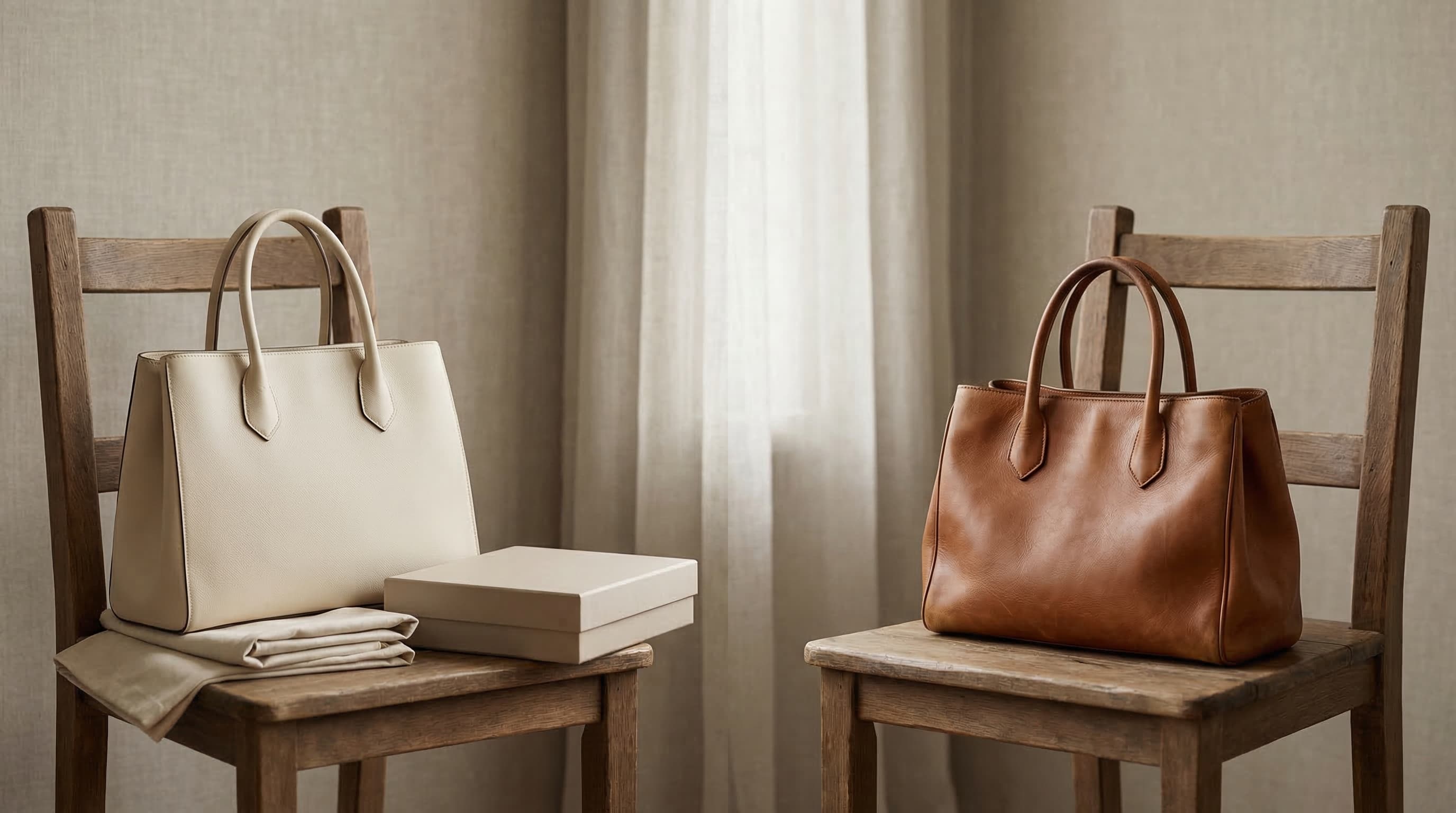
An authentic Hermès Kelly is a trapezoid, single-handle bag with a detachable shoulder strap, closed by a flap over two sangles (straps) with metal plaques and a turnlock (touret), standing on four metal feet (clou). It is built in one of two constructions — rigid, outside-stitched Sellier or softer, inside-out Retourne — and hand-sewn throughout with slightly slanted saddle stitching in waxed linen thread. The front flap carries a crisp "HERMÈS – PARIS – MADE IN FRANCE" heat stamp in a tone that matches the hardware, the left sangle plaque is engraved HERMÈS-PARIS, and a blind stamp encoding the production year and the artisan sits behind the closure strap on pre-2016 bags or inside the left side of the bag from 2016 on. The lock and its two keys carry matching numbers, the interior is lined in leather with a zip pocket, and the whole object feels dense, symmetrical, and finished — nothing glued, nothing wobbling. Fakes most often fail on machine-straight stitching, light or peeling hardware, a heat stamp whose color ignores the hardware, and a date code in the wrong location or format for the claimed year.
1. Model, Silhouette, and Size
Start by confirming the bag in front of you is the model and size it claims to be:
- The Kelly silhouette is a trapezoid with one top handle and a detachable shoulder strap. The flap closes over two sangles with plaques, secured by a turnlock, and the bag stands on four clou (feet). A "Kelly" with two handles is a Birkin claim, not a Kelly — the two models share hardware language but not architecture.
- Sizes are stated in centimetres of base width. Reference guides list the Retourne in 25, 28, 32, and 35, and the Sellier in 20, 25, 28, 32, and 35, with vintage and special pieces outside that grid. Measure the base and compare against the claimed size — replica lines routinely produce in-between widths that match no genuine size.
- The bag should stand flat and symmetrical when set down: base level, sides mirroring, top line straight. A Kelly that leans, twists, or whose flap overhangs unevenly is showing construction failure.
- The full set matters: handle, detachable strap, lock, two keys, and the leather clochette (key bell) belong to the design. A missing strap on a "complete" listing is a red flag, and replacement accessories should be priced and described as such.
2. Sellier vs. Retourne Construction
Every Kelly is one of two constructions, and each has its own tells:
- Sellier is the rigid, formal construction: the panels are stitched from the outside, so the seams are visible on the exterior, the edges are sharp, and the trapezoid holds a crisp, boxy line even empty.
- Retourne is sewn and then turned inside out, which hides the seams and leaves a softer, slightly relaxed silhouette with rounded piping at the edges. A Retourne relaxes with use; it should never look board-stiff.
- Judge the bag against its claimed construction: a "Sellier" with hidden seams and soft piping, or a "Retourne" with hard exterior stitching, contradicts itself before any stamp is checked.
- Lining follows construction in reference guides: chèvre (goatskin) linings are typical for Sellier, lambskin (agneau) for Retourne — a fabric or synthetic lining in either is a failure.
3. Saddle Stitching
Hermès sews the Kelly by hand, and the stitching is the hardest thing to fake convincingly:
- Each bag is made by a single artisan — reference guides put construction at roughly 18–24 hours per Kelly — using the two-needle saddle stitch (point sellier) with wax-coated linen thread.
- Genuine stitches sit at a slight, consistent slant, evenly spaced, small and tight, with no loose ends. Under magnification, tiny human variation is normal and reassuring.
- Machine stitching gives itself away by being too perfect: dead-straight rows of uniform stitches, or double rows of thread, are not how this bag is built.
- Edges should be painted or waxed smooth, never raw, thick, or chipped; handle attachments, sangle stitching, and the clochette should all be symmetrical and reinforced where stress concentrates.
4. Hardware, Plaques, and Pearling
The Kelly's metalwork is plated in precious metal — typically palladium or gold — and it should feel like it:
- Hardware is dense, cool to the touch, and evenly finished, with no flaking, bubbling, or plastic lightness. Finishes must match across every metal part on the bag.
- The sangle plaques are engraved "HERMÈS-PARIS" (on the left plaque, per authentication guides). On gold-plated hardware there is a small square hallmark after "PARIS" containing tiny lettering that needs a loupe to read; that box is not present on palladium — a palladium bag carrying it, or a gold bag missing it, fails this check.
- Lift the sangles: the plaques are held by rivets finished with pearling — neat notches seated into the leather, with rivet heads squared at the top. Plaques that look glued on, sit crooked, or wobble fail.
- The four feet should be secure and unable to rotate, and the turnlock should turn smoothly and sit flush. Hardware that spins, rattles, or sits off-centre is not Hermès work.
5. The Heat Stamp
The brand stamp is small, precise, and era-consistent:
- It reads "HERMÈS – PARIS – MADE IN FRANCE", heat-stamped just below the front flap, centred above the turnlock, a few millimetres below the top seam.
- The lettering is in the house's thin, crisp capitals with the grave accent on the second "è" of HERMÈS, evenly spaced and cleanly impressed — blurry, crowded, or wobbly letters fail.
- The stamp color matches the hardware: gold foil with gold hardware, silver or white with palladium. A gold-stamped bag with palladium hardware contradicts the house rule.
- The shoulder strap carries its own "HERMÈS – PARIS – MADE IN FRANCE" print near a clasp, in the same hardware-matching tone — check that it agrees with the flap stamp.
6. The Blind Stamp: Date Code and Artisan Mark
The blind stamp is the bag's internal record — a year letter plus the artisan's code, embossed without color into the leather:
- Location moved with era. On Birkin and Kelly bags made before 2016, look on the back of the closure strap (sangle). From 2016 on, the stamp sits inside the bag, on the upper left side near the seam (on the Mini Kelly, beside the interior pocket). A stamp in the pre-2016 place on a bag claimed as current production — or vice versa — is a contradiction.
- The year letter wears a shape that dates the system: a single letter with no shape = 1945–1970; letter in a circle = 1971–1996; letter in a square = 1997–2014; from 2015 the shapes were dropped and the letter sequence runs T (2015), X (2016), A (2017), C (2018), D (2019), Y (2020), Z (2021), U (2022).
- Read the whole row, not just the year letter: current stamps begin with the date code followed by letters and numbers identifying the artisan and workshop section. Huge, clumsy characters, or a code whose year fights the bag's hardware and construction era, fail.
- Two honest cautions: the stamp can fade on soft leathers, and very old bags (pre-1945) carry no stamp at all — a blind stamp alone never authenticates, and its absence in the wrong era is a question, not a verdict. It must agree with a bag that already passes the construction, stitching, and hardware checks.
7. Lock, Keys, and Clochette
The padlock set is a matched system, not loose accessories:
- The lock is solid and heavy with crisp engraving — "HERMÈS" at its base, with the accented "è", plus a number. That number must match the numbers engraved on both keys; mismatched or unnumbered keys fail.
- Both keys should be identical in teeth and engraving, hang from the leather clochette, and match the bag's hardware finish.
- The clochette itself is a small leather bell with immaculate stitching and a tidy shape; lumpy padding, loose threads, or messy cuts are replica work.
- Replacement locks and keys exist through Hermès service, so a replaced set should come with a plausible story — an undocumented mismatch priced as all-original is the problem.
8. Interior, Lining, and Zipper
Open the bag: the inside is finished to the same standard as the outside:
- The lining is leather, fitted smooth and tight — chèvre for Sellier, lambskin for Retourne in reference guides — never loose, wrinkled, or synthetic. Fake Kellys are routinely lined in faux leather that lacks the depth and smell of the real thing.
- Expect a zippered pocket with a leather pull plus an open pocket, stitched — never glued — into the lining. Seams are straight and clean, and the base sits flat.
- The zipper glides smoothly and carries fine, even "HERMÈS" lettering on the pull; the leather pull tab matches the bag's leather and color. Rough travel, glue at the pull, or a mismatched tab fails.
- Interior finishing may be marginally less perfect where stitching ends under the flap — that is a known trait of hand work, not a defect; sloppiness everywhere else is.
9. Dust Bag, Box, and the Buying Story
Finish with the accessories and the provenance:
- Current Hermès dust bags (since 2007) are beige herringbone cotton with the Le Duc carriage logo in a double circle, crisp and centred, on thick dark-brown cords; older bags came in tan velour or orange flannel. Blurry logos, thin fabric, or shiny cords mismatch the era.
- The orange box should be a thick, sturdy, vibrant orange with sharp edges; thin, dull-orange cardboard is reproduction stock. Packaging supports a verdict — it never creates one.
- The buying story has to be physically possible: Hermès does not sell the Kelly online, and new bags are allocated through boutiques rather than listed for open purchase. A "brand new, bought online from Hermès at a discount" story is impossible, and a steep discount on a claimed-new Kelly is itself evidence.
- Buy pre-owned only from sellers who show the blind stamp, heat stamp, plaques, and lock numbers clearly and offer returns. On a five-figure bag, a professional Hermès-specialist authentication is cheap insurance.
At a glance: authentic vs. fake
| Check | Authentic | Common fake tell |
|---|---|---|
| Model & size | Trapezoid, one handle + detachable strap, 2 sangles, turnlock, 4 feet; size matches a genuine 20/25/28/32/35 | Two handles, in-between size, leaning or twisted body |
| Construction | Sellier: rigid, exterior stitching; Retourne: soft, hidden seams with piping | Construction contradicts its claimed type |
| Stitching | Hand saddle stitch, slight slant, waxed linen thread, even spacing | Machine-straight perfect rows, double thread rows, loose ends |
| Hardware | Heavy palladium/gold plating, matching finishes, squared rivets, feet that cannot rotate | Light, flaking, mismatched, or wobbling hardware; glued-looking plaques |
| Plaque engraving | HERMÈS-PARIS crisp; small square hallmark after PARIS on gold only | Engraving fuzzy; hallmark on palladium or missing on gold |
| Heat stamp | HERMÈS – PARIS – MADE IN FRANCE under flap, centred, color matches hardware | Off-centre, blurry, wrong foil color for the hardware |
| Blind stamp | Year letter + artisan code; strap back pre-2016, inside left from 2016; shape matches era (circle 1971–96, square 1997–2014) | Wrong location or format for the claimed year; clumsy characters |
| Lock & keys | Matching engraved numbers on lock and both keys; tidy clochette | Mismatched/absent numbers, rough clochette |
| Interior | Leather lining (chèvre/lambskin), stitched zip pocket, smooth Hermès-lettered zipper | Faux-leather lining, glued seams, rough zipper |
| Dust bag & story | Beige herringbone dust bag (2007 on), sturdy orange box; boutique-only new purchase | Thin blurry dust bag; "bought new online at a discount" story |
FAQ
Where is the date stamp on a Hermès Kelly? It depends on the era. On Kelly bags made before 2016, look on the back of the closure strap (sangle). From 2016 onward, it sits inside the bag on the upper left side near the seam — on the Mini Kelly, beside the interior pocket. The stamp is embossed without color, so work under good light and at an angle.
How do you read a Hermès date code? The first element is the year letter. Letters ran with no surrounding shape from 1945–1970, inside a circle from 1971–1996, and inside a square from 1997–2014. From 2015 the shapes stopped: T = 2015, X = 2016, A = 2017, C = 2018, D = 2019, Y = 2020, Z = 2021, U = 2022. The letters and numbers after the year code identify the artisan and workshop section. A correct format is corroboration, not proof — counterfeiters copy codes.
What is the difference between Kelly Sellier and Retourne? Sellier is the rigid construction with stitching visible on the outside and sharp, boxy edges. Retourne is sewn and turned inside out, so the seams hide inside and the bag is softer with rounded piping. Neither is "more authentic" — but a bag whose construction contradicts the type it is sold as fails authentication.
What is pearling on a Kelly bag? Pearling is how Hermès finishes the rivets that hold the sangle plaques: lift the strap and the plaque fixings sit as neat notches seated into the leather, with squared rivet tops. Plaques that look glued to the surface or sit crooked are a recognised red flag.
Should the heat stamp match the hardware color? Yes. The "HERMÈS – PARIS – MADE IN FRANCE" stamp is foiled gold on bags with gold hardware and silver or white on palladium bags. A stamp color that ignores the hardware is a contradiction — and the same rule applies to the print on the shoulder strap.
Do all real Kelly bags come with a lock and keys? The design includes a padlock, two keys, and a leather clochette, with matching engraved numbers across lock and keys. Locks and keys can be replaced through Hermès service, so a replaced set is not automatically a fake — but it should be disclosed and priced accordingly.
Bottom line
Authenticating a Kelly means authenticating a system. Start with the architecture — trapezoid body, one handle plus strap, two sangles, turnlock, four feet, in the right size and the right construction — then make the details agree: hand-slanted saddle stitching, heavy plating with pearling-seated plaques and the correct plaque hallmark, a heat stamp whose foil obeys the hardware, and a blind stamp in the right place, in the right format, for the year the bag claims. One failed check is a warning; two or more is a walk-away — and on a bag at this price, a specialist authentication before money moves is simply part of the purchase.
Related reading: How to Authenticate a Goyard Saint Louis Tote · How to Authenticate a Celine Triomphe Bag · How to Authenticate a Bottega Veneta Jodie · How to Authenticate a Balenciaga City Bag · How to Authenticate a Fendi Baguette Bag · How to Authenticate a Cartier Love Bracelet · How to Authenticate a Prada Galleria Bag · How to Authenticate a Gucci Marmont Bag · How to Authenticate a Saint Laurent Loulou · How to Authenticate a Dior Saddle Bag · How to Authenticate a Chanel Classic Flap · How to Authenticate a Louis Vuitton Neverfull · How to Authenticate a Hermès Birkin
Sources
Facts in this guide were checked against the following public sources on 2026-10-02.
- House history (Sac à dépêches redesigned by Robert Dumas in the 1930s; Grace Kelly photograph 1956; name made official in 1977), architecture (trapezoid, one handle, detachable strap, four clou feet, two sangles, touret and plaque), sizes (Retourne 25/28/32/35; Sellier 20/25/28/32/35), single-artisan construction of 18–24 hours — PurseBop, "The Hermès Kelly: the Retourne Versus Sellier Comparison Guide": https://www.pursebop.com/the-hermes-kelly-retourne-or-sellier/
- History and construction overview (1930s Sac à dépêches; 1956 renaming moment; sellier vs. retourne; sizes 20–35) — Whoppah, "Hermes Kelly Guide: History, Sizes, Sellier vs Retourne": https://www.whoppah.com/blog/hermes-kelly-guide
- Date and blind stamp system (year letters: no shape 1945–1970, circle 1971–1996, square 1997–2014, T 2015 / X 2016 / A 2017 / C 2018 / D 2019 / Y 2020 / Z 2021 / U 2022 without shapes; artisan/section codes; gold-hardware hallmark note) — Yoogi's Closet, "Hermes Authentication Guide & Serial Codes": https://www.yoogiscloset.com/authenticate/hermes
- Blind stamp locations (Birkin/Kelly 1945–2016 inside the closure strap; from 2016 inside the upper left of the bag) and invoice/stamp matching — The Birkin's & Kelly's House, "Guide to Hermès date stamps": https://thebirkinsandkellyshouse.com/guide-to-hermes-date-stamps/
- Blind stamp locations (pre-2016 back of the sangles; since 2016 inside, left side toward the rear; Mini Kelly beside the interior pocket) — PurseBop, "Guide to Hermès Date Stamps": https://www.pursebop.com/a-collectors-guide-to-hermes-date-stamps/
- Heat stamp (position below the front flap centred above the turnlock; thin crisp font; color matches hardware), blind stamp placement and format, saddle stitch (two needles, slightly angled, waxed feel; 18+ hours), lock and key numbering (matching numbers, heavy solid lock), zipper and clochette finish, linings (chèvre for Sellier, lambskin for Retourne), interior zip and open pockets — Rome Station, "How to Authenticate a Hermès Kelly Bag: Key Features": https://romestation.ca/blogs/news/how-to-authenticate-a-hermes-kelly-bag-key-features-to-look-for
- Plaque engraving ("Hermès – Paris" on the left closure-strap plaque; small square symbol beside it on gold-plated hardware only), shoulder-strap clasp engraving, lock base engraving with accented "è", matching key numbers — The Birkin's & Kelly's House, "How to tell if a Kelly bag is real?": https://thebirkinsandkellyshouse.com/how-to-tell-if-a-kelly-bag-is-real/
- Hardware (palladium/gold plating; HERMÈS-PARIS plaque engraving; small loupe-readable box after PARIS on gold, absent on palladium; feet secure and non-rotating; squared rivet tops), stitching (hand-stitched, slight upward slant, finished under the flap), dust bags (beige herringbone cotton since 2007; tan velour vintage, orange flannel newer), blind stamp relocation at end of 2015 to the inside left gusset — Madison Avenue Couture, "How do I Know I'm Buying an Authentic Hermès Bag?": https://madisonavenuecouture.com/blogs/news/how-do-i-know-im-buying-an-authentic-hermes-bag